
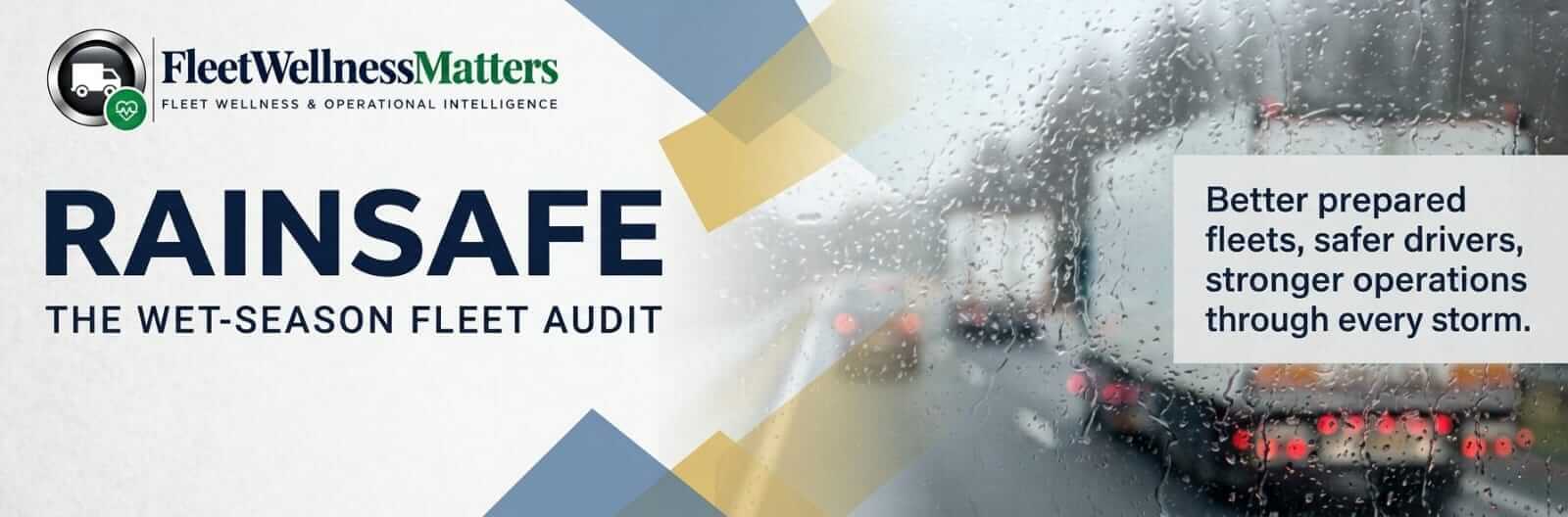
Rain can reduce visibility, affect tyre grip and increase stopping distances. Flooded roads create additional dangers because water depth, road damage and the strength of the current may be difficult to judge.
Before the journey
- Check the weather forecast and known route disruptions.
- Inspect tyres, wipers, lights and braking systems.
- Confirm alternative routes and safe stopping places.
- Allow extra travel time rather than pressuring drivers to maintain normal schedules.
During the journey
- Reduce speed to suit the conditions.
- Increase following distance.
- Use lights appropriately and avoid sudden braking or steering.
- Never drive through floodwater when its depth, current or road condition is uncertain.
- Stop in a safe location if visibility or road conditions become dangerous.
- Notify dispatch of delays and route changes.
Fleet manager action: Make sure drivers can report hazardous routes without being penalised for making a reasonable safety decision.
The takeaway: No delivery is worth risking a driver, vehicle or other road user’s life.