
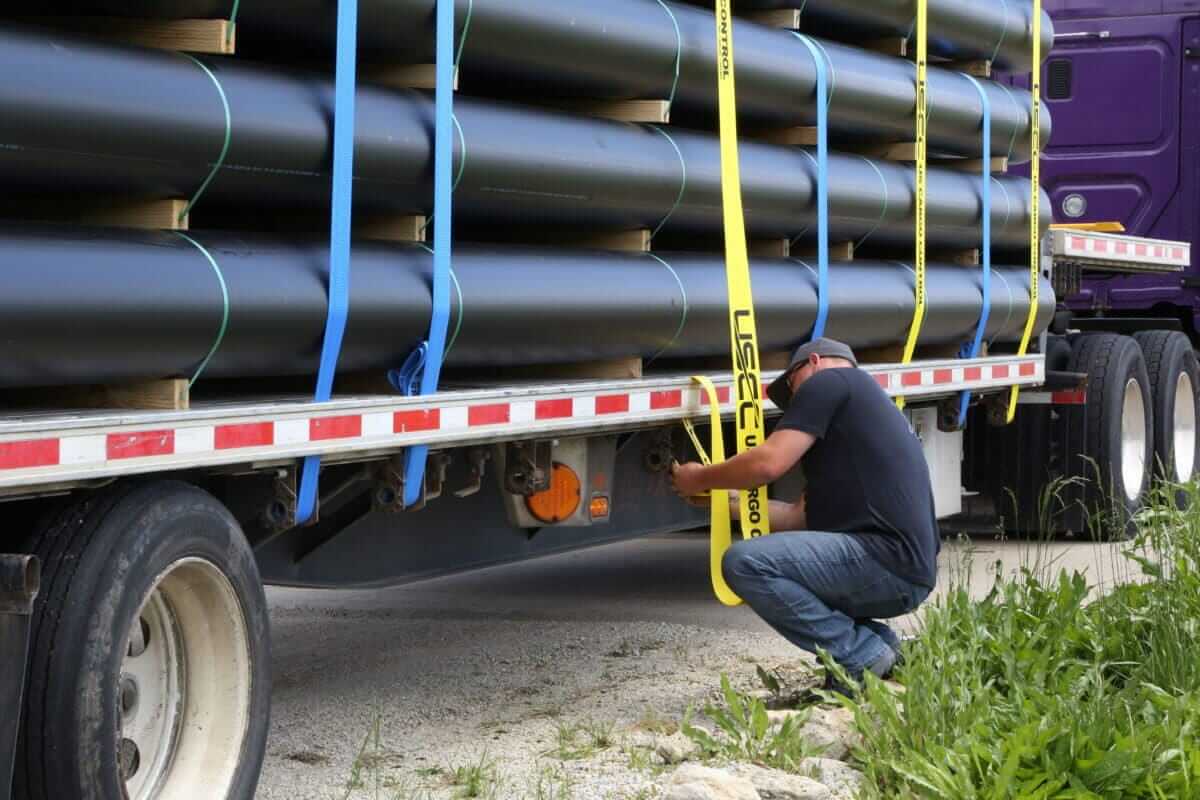
An unsecured or poorly distributed load can shift during braking, cornering or sudden manoeuvres. This can affect vehicle stability, damage cargo and create serious road hazards.
Drivers and loading teams should follow the requirements for the specific vehicle, cargo and securing equipment.
Before departure, confirm that:
- The load is distributed and secured according to the approved loading plan.
- Straps, chains, restraints and anchor points are suitable and in good condition.
- Doors, curtains and other closures are properly secured.
- The load does not exceed applicable vehicle or axle-load limits.
- Required covers and dangerous-goods precautions are in place where applicable.
- The load is rechecked at designated safe stops when required by the operating procedure.
If something is wrong: Do not continue until the problem has been assessed and corrected by an appropriately trained person.
Fleet manager action: Train loading teams and drivers together, document checks and investigate repeated load-security failures.
The takeaway: Safe loading is a shared responsibility between the loading team, operator and driver.